Sean’s entry into Presentation College
The Greatest Beer Run Ever: A Memoir of Friendship, Loyalty, and WarSean’s entry into Presentation College is a decisive turn in his education: at thirteen, after seven schools and the threat of being sent to work, he gained a half-scholarship and a father’s reluctant permission to continue studying. The opportunity depended not only on academic promise but on people willing to recognize it, and on a direct negotiation between the school and a father who needed his son’s labour on the farm.
A rare opening in secondary education
At thirteen, Sean had already attended seven schools. His first good fortune came with the opening of Rosary High School in Carrick-on-Shannon. Mrs Lynch had begun with a secretarial school for girls, then responded to the lack of local secondary education by establishing a school for boys and girls. The Marist Convent had long served girls, but the county town had no secondary school for boys. A married woman educating adolescent boys and girls alarmed the Church: it tried to close her school and then brought in the Presentation Brothers, but neither effort succeeded. Both schools prospered, leaving the small town and its poor hinterland with three good schools at a time when secondary education was otherwise largely available to the rich or the academically bright.
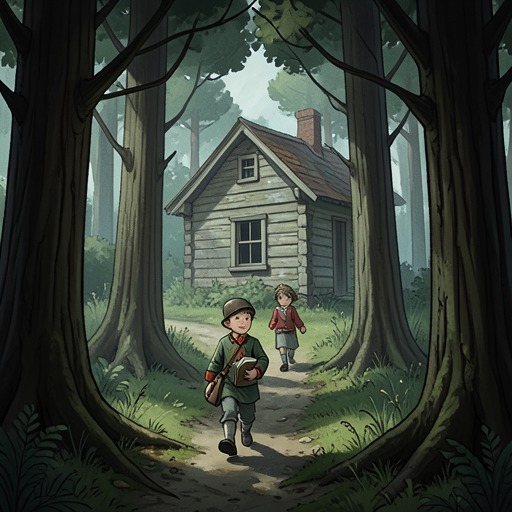
That local change mattered to Sean because it made a further step possible. In the evenings and at weekends in the early summer of 1948, Brother Damien, the first principal of Presentation College, cycled around the countryside seeking suitable pupils for the new school. He persuaded Francis (Frank) McGahern to let Sean sit the house-scholarship examination. Sean won a half-scholarship; that September, he began the eight-mile cycle from the barracks to Carrick-on-Shannon. Some boys came from the town, but many, like Sean, travelled in from the countryside.
A school built from another institution
Presentation College occupied part of a former British military barracks in Carrick-on-Shannon. The Brothers lived in one wing, while the school filled the other part of the three-storey building. The old drilling square had become lawns, trees, and a sanded yard where the boys played soccer with a tennis ball. Behind the school were a handball alley and a large vegetable garden; a high wall enclosed the grounds.
The everyday arrangements made the distance between school and farm life tangible. The boys stacked their bicycles in a large downstairs room and, when rain kept them inside at lunchtime, ate sandwiches with bottles of milk there. Punctures were a familiar interruption: one or more boys could usually be found repairing an upturned bicycle in a corner. For Sean, the eight-mile ride was both a practical burden and a route into a new world of study.
His lessons supplied another kind of journey. He learned English texts by heart, including Macbeth, Henry IV, Wordsworth’s Prelude, Tintern Abbey, Tennyson’s In Memoriam, and Virgil’s poem about fields, vines, bees, horses, and herds. Cycling alone on the empty roads, he chanted the lines aloud. He also knew the Ordinary of the Mass by heart; through the study of Caesar, Virgil, Cicero, and Horace, its words began to acquire meaning for him. The school’s classical and literary education thus reached beyond the classroom, accompanying him on the very roads that connected the barracks to the countryside.
Brother Placid intervenes
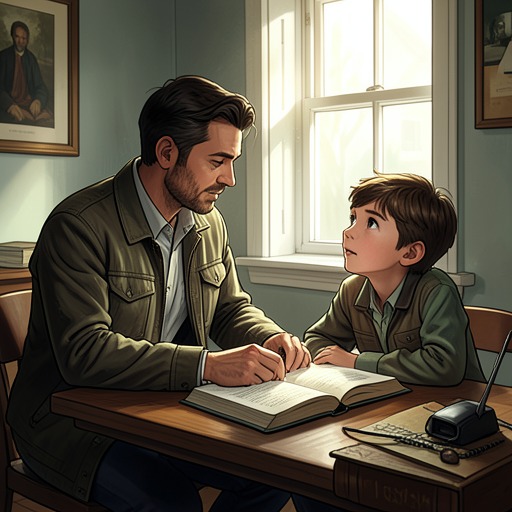
Brother Placid replaced Brother Damien as principal. He was a good footballer who played for the town team and was fond of drink, yet remembered by Sean as an exceptional teacher. Behind thick spectacles, his eyes could show humour, encouragement, or disapproval; he regularly polished the lenses with a white handkerchief. When Sean’s results were particularly good in his third year, Placid checked his attendance and discovered that he was absent for several weeks every spring and autumn.
The absences had a material cause: those were the seasons when Sean worked on the bog and in the potato fields. When he explained this, Placid’s eyes danced with amusement. The previous Christmas, Francis (Frank) McGahern had given the principal a bag of potatoes, although a bottle of Redbreast whiskey would have been more welcome. Placid told Sean that he could win a university scholarship in two years if he worked, but not if he continued to miss substantial parts of the school year. His warning made the conflict plain: Sean’s prospects depended on sustained attendance, while the household economy relied on his labour.
The decision in the potato field
In late October, while Sean and his father were working their conacre in Coxhill, Brother Placid cycled out to see them on a bitterly cold evening. Francis (Frank) McGahern was digging potatoes; Sean was picking them. Placid talked agreeably with both, then asked to speak privately with the father. The two men walked toward the road and spoke for a long time, too far away for Sean to hear. His father returned slowly and remained silent while Sean continued picking and hauling buckets to the pit.
At last, Francis (Frank) McGahern told his son, “I’m surprised, but that Brother seems to think he may be able to make something of you if you are prepared to work. You better go back to that school in the morning. I’ll manage somehow on my own.” The permission was practical and costly: the father accepted that he would manage the work without Sean, in order to give his son another chance at school.
The decision reversed an earlier threat. Only a year before, Sean had used all his determination to prevent his father from placing him in a job as an accounts clerk and general factotum at a hardware store in a small town close to Dublin. Now, with Placid’s recommendation behind him and his father’s consent secured, he could imagine his future as something held in his own hands. The scholarship alone had not settled the question of whether he could remain in education; the conversation in the field changed that question into a possibility.
Education as a lasting change
Sean remembered his years at Presentation College as the beginning of an adventure that never stopped. Each ride toward Carrick-on-Shannon brought anticipation rather than the fear and drudgery he associated with school before. The Brothers admitted him, seated him among books, and gave him intellectual tools; he later described those years as a period of luck, privilege, and grace.
The event’s significance lies in how contingent that transformation was. A local school created a place for a rural boy; Brother Damien found him and secured his examination; his scholarship demonstrated promise; Brother Placid connected that promise to the cost of seasonal absence; and Francis (Frank) McGahern finally yielded the labour he had expected from his son. Education did not erase farm work or poverty, but the decision to return the next morning opened a life beyond the hardware-store job his father had once contemplated. The long cycle from the barracks became, in retrospect, the daily passage into a world Sean was beginning to know and love.